Call of Duty: Infinite Warfare
- Nov 14, 2016
- 7 min read

In recent years, Call of Duty has had a distinct focus on moving the franchise forward, further away from its popular Modern Warfare titles, and even further away from it World War roots. Whilst some dedicated fans have now left franchise, claiming that this is not the Call of Duty they want, Call of Duty: Infinite Warfare is a shooter that should still be respected. In its own right, Call of Duty: Infinite Warfare is a decent first-person shooter, with solid gameplay, an expanse of multiplayer modes and vivid action sequences; as part of the Call of Duty franchise, Infinite Warfare does feel somewhat like a black sheep.
Screw It, Let’s Go to Space
Ever since Sledgehammer Games’ Call of Duty: Advanced Warfare in 2014, the franchise has been making its way ever so steadily into the future, and with Infinite Warfare we are finally in space. Though it doesn’t feel quite feel like a Call of Duty game, Infinite Warfare is a game I urge fans of the franchise and the genre in general to not pass on so easily.
If I’m being honest – and I have/want to be, it’s a review – Infinite Warfare’s single-player campaign was what I liked most about the franchise’s latest instalment, but it is a tad complicated. Personally, I didn’t like any of the characters. I didn’t dislike them. I feel neutral about them. In terms of a personality, I didn’t feel any of the characters expressed one to the point that I cared about them. The same can be said for Salen Kotch, the lead villain played by Kit Harrington (of Game of Thrones fame).

His performance felt reserved, restricted, wooden: like he wanted to let go and be a villain, but couldn’t. None of the characters were boring necessarily, but none of them are very memorable (I’ve had to look up their names again for the purposes of this review, even though, at the time of writing, I finished the game today).
Thankfully, despite the characters being simply alright, the rest of the single-player campaign was great. Its story takes you all across the solar system; as commander Nick Reyes you’ll be leading a team of devoted soldiers in an all-out assault against the Settlement Defence Front. Venus, Mars, Saturn, Earth, Outer Space and more are all waiting to be explored and fought on. A constantly moving backdrop of different locales and environments helps Infinite Warfare’s visuals and levels to remain fresh, and they more than often deliver remarkable vistas.

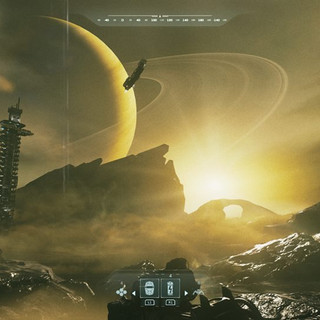




Don’t go into the game thinking that you’ll be subject to graphics that are better than or even on par with the likes of Battlefield 1, though, because as remarkable as they may be at times, Infinite Warfare comes nowhere near the graphical fidelity of its biggest rival this year.
On sound design, however, Call of Duty comes out on top. Over the past 5 or so years, sound design in video games has improved dramatically, and Infinite Warfare carries this on. Nowadays I like to play my games with a gaming headset, as opposed to running audio through my sound bar, and there’s no way I’ll ever go back. The creaking and cracking of the spacecraft as it enters the atmosphere, the thumping boom that comes with the explosion of a grenade, or even the gentle whisper of the Martian wind passing by, Call of Duty’s sound engineers need to be applauded.
The Armoury
But graphics and fantastic audio aren’t everything, as any good gamer will tell you. It’s about the gameplay, and Call of Duty: Infinite Warfare has lots of it, most of it brilliant.

Infinite Warfare builds off what was lightly introduced in Call of Duty: Black Ops III: allowing you to break away from a linear, mission-tiered game, and giving you optional side missions. There aren’t a lot of side missions present in the game, and all of them involve some form of Jackal usage, but I quickly came to love them.
The Jackal missions are what everyone wanted from Star Wars Battlefront: fast-paced spacecraft combat. There are a small handful of missions which take it slightly further than just dogfighting, and see you enter an enemy ship to steal an item, hack a computer or simply leave bombs that can be detonated once you’re out. I love aerial dogfighting (they’re the only modes I play in Star Wars Battlefront and Battlefield 1) and I can honestly say that the Jackal missions are some of the best in the game.
And these missions do offer up rewards (besides fantastic gameplay). Completing these will reward you with attachments for your weapons. Attachments can help your weapons gain the edge in combat in a variety of ways, such as improving its damage, range, magazine capacity (etc.).
You’ll also notice on most of, if not all of the side missions that Ace Pilots are called in when the enemy are about to lose. These are marked targets, targets that your army are specifically looking for. Taking them down will deliver a nice little popup message letting you know they’ve been KIA, and upon returning to your captain’s quarters, you’ll be able to view which ones are still out there and which ones you’ve already dealt with.
Space combat does also appear in the main story, too. You’ll often come across a mission which requires you to deploy into space and fight the enemy whilst floating around. Amongst the debris of shattered asteroids and broken spaceships, enemies can sometimes be hard to see, even with the small, orange HUD that appears to let you know they’re there. Get up close, however, and fighting whilst weightlessly moving around becomes really fun. And what better way to get closer than to grapple onto an enemy with your hook and placing a live grenade onto them, or smash their mask, exposing them to space?
Being a Call of Duty game, and coming from the studio that created the likes of Modern Warfare, Infinite Warfare continues the trail of fantastic shooting and combat mechanics. Weapon controls feel tight and intuitive, and never once did I miss a shot because I found the weapon to be too difficult to aim.

There’s an absolutely huge roster of weapons to unlock, and each one can be upgraded further with attachments. At the beginning of each mission you’ll have to report to Griff and select your loadout, and here is where you’ll be able to customise weapons. Though you are free to go in with any weapon you’ve unlocked, Griff does always offer a pre-set loadout called Griff’s Recommendation. From the types of weapons and additional loadout items that appear here (grenades types, shield, hacking devices etc.), I was easily able to work out which weapons I should pick if I decide to create my own loadout.
Screw It, Let’s Go to Space…Together
Competitive multiplayer. The bit that most Call of Duty gamers love. After coming off of an impressive campaign that really surprised me, the multiplayer felt very standard for Call of Duty. There’s nothing wrong with it – you’ve got all of your fan-favourite modes such as Team Deathmatch, Free-For-All, Capture the Flag, Domination (etc.), and some of the more specialist modes such as Gun Game, Mosh Pit and Infected – but it doesn’t do much, if anything, to change it up. That’s not necessarily a bad thing (don’t fix what isn’t broken) but if you’ve played Call of Duty before, or one of the older Battlefield games, then you’ve seen all of this before.
Competitive multiplayer can be frustrating for new players. As you get better and better, gaining more experience from matches, you’ll level up, unlocking access to new weapons, perks and attachments. Many of these, especially the ones available at higher levels, can give more experienced players a very large advantage over ones that are new to the game. To combat this, many games have implemented a system which tries to put people into matches with others of similar skills and levels, but no such system appears to be in place here (if it is it certainly didn’t present itself during my time with the game).
Screw It, Let’s Go Fight Zombies Instead
Whilst there may be woes with the competitive multiplayer, the included Zombies in Spaceland cooperative mode is pretty fun. In a team of up to 4 players, you’ll have to survive waves of zombies, and a few other enemy types, as they continually attack. I really enjoyed playing this mode with personal friends of mine, as we’d all play with headsets and help each other out. Playing with random people over the internet often placed me into a group of 4 with people who don’t own/don’t like headsets and are focused on boosting their own score rather than playing as a team.
The whole mode has a 1980s theme to it. The characters you play as will all have stereotypical 80s outfits, the theme park you play in will have 80s-inspired themes and fonts, and you’ll even hear a few famous music tracks from the decade, too.
For me, Zombies in Spaceland was by far the better of the two multiplayer modes. I’ve always been one for cooperative modes over competitive modes, though, so this just comes down to personal preference.
My Verdict
Call of Duty: Infinite Warfare delivers a great first-person shooter package that fans of the series and genre as a whole shouldn’t be too quick to dismiss. Its single-player campaign is genuinely, thoroughly enjoyable, even if its characters do often feel a little wooden, and almost every level was a joy to play through.
Though I found the cooperative Zombies mode fun with friends, it’s unfortunately the competitive multiplayer that (surprisingly) lets it down for me. Having played previous instalments in the franchise, I was hoping for something new. Something big, bold and exciting. But sadly it seems that I’ve played it all before. There’s just not enough that’s new to come for the campaign and actually stay for the multiplayer.
8/10

Call of Duty: Infinite Warfare is available on PlayStation 4, Xbox One and PC.
Reviewed on PlayStation 4.


Comments